

Selling a restaurant is one of the biggest financial decisions you will ever make. Years of hard work, long hours and investment are reflected in a single price, and the way the sale is structured can make a difference of tens of thousands of pounds to what you actually keep after tax. At NS Accounting, we help owners selling a restaurant, cafe or takeaway in Uxbridge, Hillingdon, West London and across the UK prepare their business, understand its value, plan the tax and complete the sale with confidence.
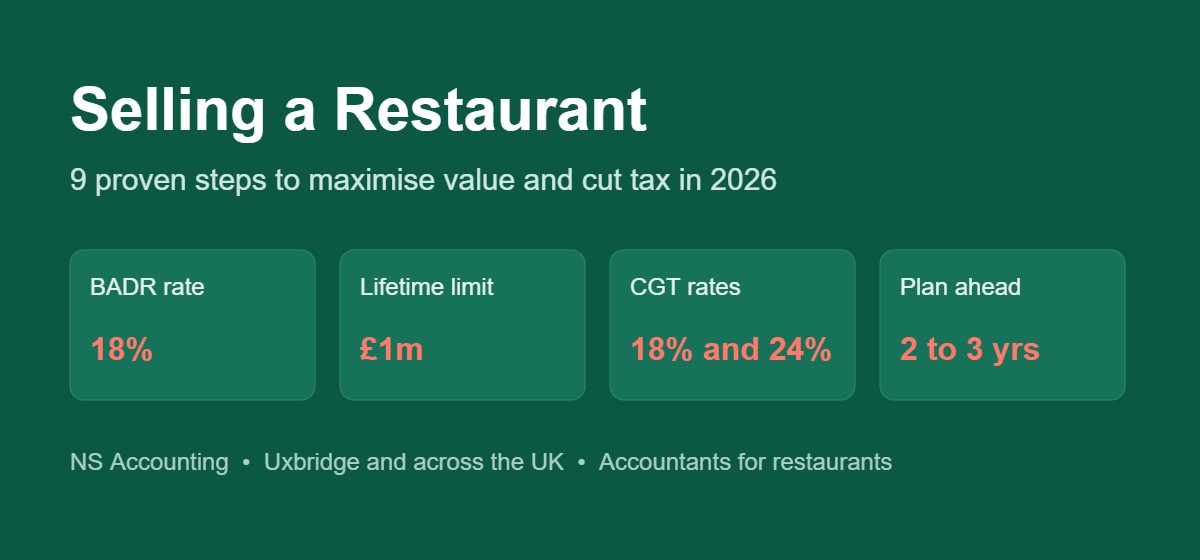
This guide explains how restaurant valuations work, how to prepare your accounts, the difference between a share sale and an asset sale, the tax you may pay, and 9 proven steps to maximise value when selling a restaurant in 2026. If you are thinking about selling, contact NS Accounting for a free, confidential consultation.
Why Planning Ahead Matters When Selling a Restaurant
Most owners start thinking about selling a restaurant only when they are tired, unwell, ready to retire or keen to start a new venture. By then, there may be little time to improve the business or plan the tax. Ideally, planning should begin two to three years before a sale. That gives time to strengthen profit, tidy up the accounts, resolve lease issues and structure the business in the most tax efficient way.
Buyers pay for evidence, and selling a restaurant is far easier when the evidence is clear. A restaurant with clean, accurate accounts, consistent profits and clear systems will usually sell faster and for a higher price than one with messy records and unexplained figures, even if the two businesses take similar amounts of money.
How Are Restaurants Valued?
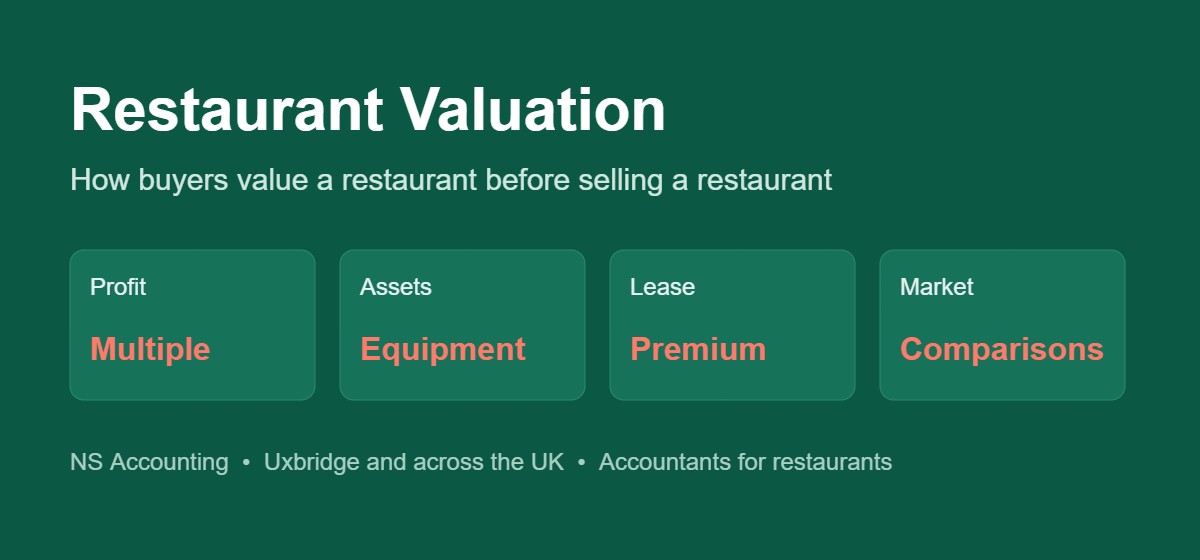
There is no single formula for valuing a restaurant, but most valuations use one or more of the following methods.
Multiple of Profit
The most common approach for profitable restaurants is to apply a multiple to adjusted profit, often measured as EBITDA, which is earnings before interest, tax, depreciation and amortisation. Adjustments remove one off costs and personal expenses, and replace the owner’s own pay with a market rate for a manager. Small independent restaurants often sell for a modest multiple of adjusted profit, while larger, well established or multi site businesses can achieve higher multiples.
Asset Based Valuation
Where profits are low, the business may be valued mainly on its assets, including kitchen equipment, furniture, fixtures and stock. This usually produces a lower price.
Leasehold Premium
In many restaurant sales, especially in busy high streets, much of the value lies in the lease itself. A long lease at a good rent in a strong location can command a premium, even if the current business is not very profitable.
Market Comparisons
Brokers also look at recent sales of similar restaurants in the area. Location, footfall, the condition of the premises and the terms of the lease all affect the price a buyer will pay.
The table below summarises the main factors that increase or reduce value when selling a restaurant.
| Increases value | Reduces value |
|---|---|
| Consistent, well documented profits | Falling sales or unexplained losses |
| Long lease at a fair rent | Short lease or upcoming rent review |
| Strong management team | Business depends entirely on the owner |
| Modern, well maintained equipment | Old equipment needing replacement |
| Clean accounts and tax records | Cash sales not fully recorded |
| Good reviews and strong brand | Poor hygiene rating or bad reviews |
Share Sale or Asset Sale?
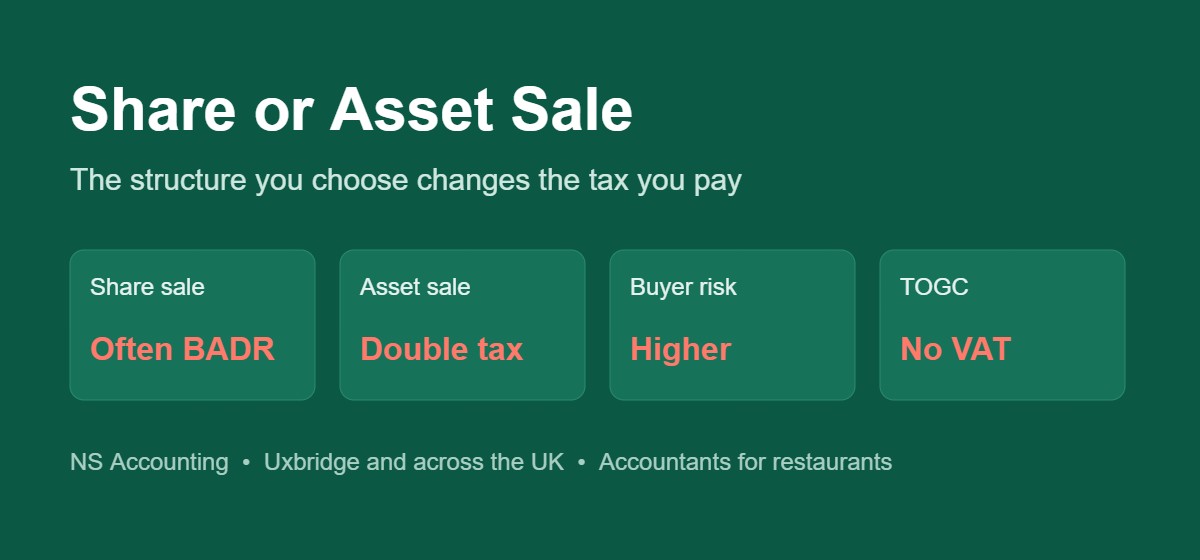
How you sell has a big effect on the tax you pay and the risks you keep.
Share Sale
If your restaurant is run through a limited company, you can sell the shares in the company. The buyer takes over the company with all its assets, contracts, staff and history, including any past tax liabilities. Because the buyer takes on more risk, they will usually carry out detailed due diligence and ask for warranties and indemnities. For the seller, a share sale is often more tax efficient, because the gain may qualify for Business Asset Disposal Relief.
Asset Sale
In an asset sale, the company or sole trader sells the business assets, such as goodwill, equipment, stock and the lease, while keeping the legal entity. Buyers often prefer asset sales because they do not inherit past liabilities. However, when selling a restaurant through an asset sale from a company, the profit is taxed in the company first, and then again when you extract the money, which can increase the overall tax bill.
Our specialist tax advice team can model both options so you can see the net amount you would keep under each structure.
Tax When Selling a Restaurant
The tax you pay when selling a restaurant depends on your structure, how long you have owned the business and how the sale is arranged.
Capital Gains Tax
Individuals selling shares or business assets usually pay Capital Gains Tax on the gain. The main rates are 18% for gains within the basic rate band and 24% for gains above it.
Business Asset Disposal Relief
Business Asset Disposal Relief can reduce the rate of Capital Gains Tax on qualifying business gains, up to a lifetime limit of £1 million. The rate rose to 14% from April 2025 and to 18% from April 2026. To qualify on a share sale, you generally need to have been an officer or employee of the company and to have held at least 5% of the shares and voting rights for at least two years before the sale. Careful planning is essential to make sure the conditions are met.
Corporation Tax on an Asset Sale
Where a company sells its assets, any profit on goodwill and equipment is subject to corporation tax at up to 25%. Extracting the proceeds as dividends or through liquidation then creates a second layer of tax, although a members’ voluntary liquidation may allow the remaining funds to be taxed as a capital gain in some cases.
VAT and Transfer of a Going Concern
If the restaurant is sold as a going concern to a VAT registered buyer who continues the same type of business, the sale can usually be treated as a Transfer of a Going Concern. This means no VAT is charged on the sale price. Getting the conditions right is important, as charging or not charging VAT incorrectly can cause expensive problems. Our VAT services can confirm the correct treatment.
9 Proven Steps to Maximise Value When Selling a Restaurant
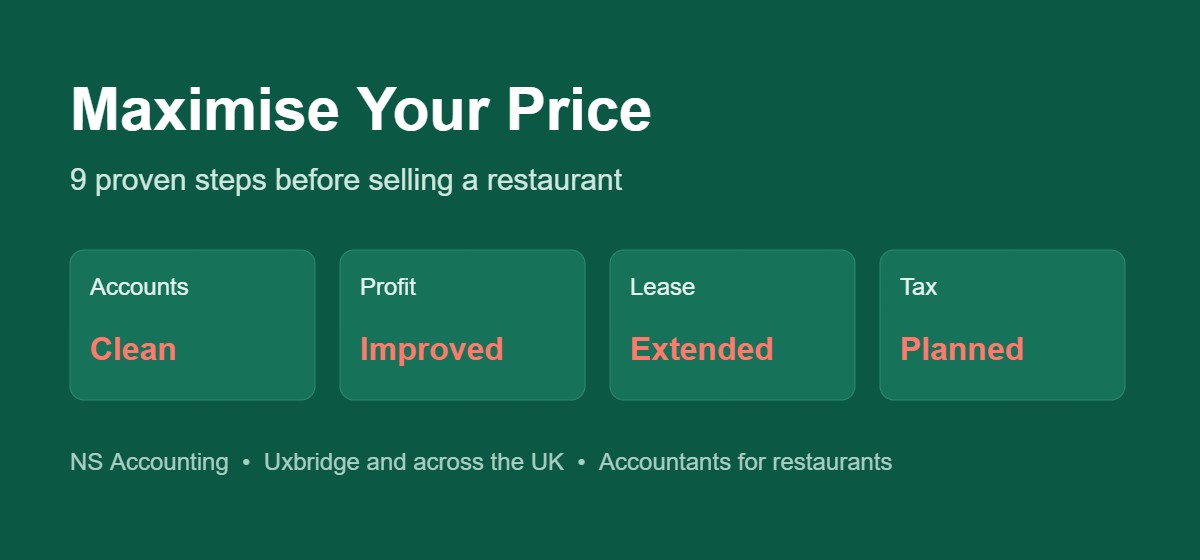
These are the steps we take with every client who is selling a restaurant, whatever its size.
1. Get Your Accounts in Order
Buyers and their advisers will review at least three years of accounts. Make sure your statutory accounts are accurate, filed on time and supported by clean bookkeeping. Our bookkeeping services can bring records fully up to date.
2. Prepare Monthly Management Accounts
Recent monthly figures show buyers that the business is performing well right now. Our guide to restaurant management accounts explains what buyers will expect to see.
3. Improve Profit Before You Sell
Because value is often based on a multiple of profit, every £1 of extra annual profit can add several pounds to the sale price. Tighten food costs, review pricing, manage labour and cut unnecessary overheads.
4. Separate Personal and Business Costs
Personal expenses run through the business reduce reported profit. Identify and document these so they can be added back in the valuation, and stop them well before the sale.
5. Review the Lease
Check the remaining term, rent review dates, break clauses and whether the landlord must consent to an assignment. A short lease can put buyers off, so consider negotiating an extension before marketing the business.
6. Reduce Dependence on You
If the restaurant only works because you are there every day, buyers will see risk. Train managers, document recipes and processes, and make sure key supplier relationships are with the business rather than with you personally.
7. Resolve Tax and Compliance Issues
Unpaid VAT, payroll errors or open HMRC enquiries will be found in due diligence and can reduce the price or stop the sale. Deal with them before you start marketing the business.
8. Plan the Tax Structure Early
Check whether you qualify for Business Asset Disposal Relief, whether a share sale or asset sale is best, and how proceeds will be paid. Deferred payments and earn outs have their own tax rules.
9. Build the Right Team
A specialist business broker, a solicitor experienced in hospitality sales and an accountant who understands restaurants will help you achieve the best result.
What Happens During Due Diligence?
Once a buyer agrees a price in principle, they will carry out due diligence. This usually covers financial records, tax returns, VAT returns, payroll records, employment contracts, the lease, licences, supplier contracts, food hygiene records and any legal disputes. Buyers may also ask to observe trading or review EPOS data directly.
Restaurants with clear records and quick answers keep buyers confident and reduce the risk of price reductions late in the process. We can prepare a data room with all the financial information a buyer is likely to request.
Staff and TUPE
When selling a restaurant as a going concern, employees usually transfer automatically to the buyer under the TUPE regulations, keeping their existing terms and length of service. Both seller and buyer have duties to inform and, in some cases, consult staff. Accurate payroll and holiday records make this process smoother. Our payroll management service can prepare the employee information the buyer needs.
Buying a Restaurant: Key Financial Checks
If you are on the other side of the deal and buying a restaurant, the same principles apply in reverse. Before you commit, check:
- At least three years of accounts and recent management figures
- VAT returns, EPOS reports and bank statements to confirm sales
- Gross profit margins compared with sector benchmarks
- Wage costs, staff contracts and any tronc arrangements
- Lease terms, rent reviews and landlord consent
- The age and condition of kitchen equipment
- Any outstanding tax or HMRC enquiries
Buying assets rather than shares usually reduces your risk. If you are setting up a new company to buy the business, our company formation service can help, and our restaurant startup accounting guide covers the first steps after purchase.
When Is the Best Time for Selling a Restaurant?
The best time for selling a restaurant is usually when trading is strong and the accounts show a clear upward trend, rather than when the business is struggling. Buyers pay for recent performance, so selling a restaurant after two or three years of rising profit normally achieves a better price than waiting until sales start to fall.
Timing also matters for tax. Selling a restaurant early in a tax year can delay when Capital Gains Tax is payable, and spreading proceeds across tax years can make better use of allowances and basic rate bands in some cases. Changes in tax rates can also affect the outcome, so it is worth reviewing your plans each year with your accountant.
Selling a Restaurant as a Sole Trader or Partnership
If you trade as a sole trader or partnership, you cannot sell shares, so selling a restaurant means selling the business assets, including goodwill, equipment, stock and the lease. Any gain on goodwill and other chargeable assets is subject to Capital Gains Tax, and Business Asset Disposal Relief may be available if you have owned the business for at least two years and dispose of the whole business or a distinct part of it.
You will also need to prepare final accounts to the date of sale, report the disposal on your Self Assessment tax return and consider the balancing adjustments for capital allowances on equipment sold with the business. Careful planning before selling a restaurant as a sole trader avoids surprises in your final tax bill.
What to Do With the Money After Selling a Restaurant
Once the sale completes, think carefully about how the proceeds will be used. Set aside enough to cover Capital Gains Tax, which for individuals is usually due by 31 January after the end of the tax year of sale, and any final income tax or corporation tax bills. If you plan to invest in a new business, buy property or make pension contributions, take advice before acting, as the order and timing of these decisions can affect your tax position.
An Example of Selling a Restaurant
Consider the owner of a restaurant in Uxbridge, run through a limited company for eight years, with annual sales of £750,000. The owner wanted to retire within two years. Reported profit was £60,000, but the accounts included personal car and family costs, and the owner paid themselves below market rate.
Over 18 months, we helped the owner tidy the accounts, remove personal costs, introduce monthly management accounts and improve gross margin through menu pricing. Adjusted profit rose to £105,000. The business was sold through a share sale, and because the owner met the conditions for Business Asset Disposal Relief, the gain was taxed at the reduced rate. The result was a significantly higher sale price and a lower tax bill than an unplanned asset sale would have produced. Figures are illustrative, but this shows why planning matters when selling a restaurant.
Common Mistakes When Selling a Restaurant
- Starting to plan only a few months before the sale
- Presenting accounts that understate profit because of personal costs
- Ignoring lease issues until a buyer raises them
- Not checking eligibility for Business Asset Disposal Relief
- Agreeing to an asset sale without modelling the tax
- Charging VAT incorrectly on a going concern sale
- Letting standards slip while the sale is in progress
Why Choose NS Accounting When Selling a Restaurant?
NS Accounting is a firm of accountants based in Uxbridge, supporting restaurants, cafes and takeaways across Hillingdon, Ruislip, Hayes, West Drayton, Southall, Ealing, Slough and the rest of the UK. When selling a restaurant, we help with:
- Preparing accounts and management figures for buyers
- Calculating adjusted profit and supporting your valuation
- Modelling share sale and asset sale options
- Business Asset Disposal Relief and Capital Gains Tax planning
- VAT and Transfer of a Going Concern advice
- Supporting buyers with due diligence requests
- Final accounts, Self Assessment and company closure after the sale
Our CFO services are ideal for owners planning an exit over several years. Learn more about our accountants for restaurants service, read our client testimonials or meet the team. You can also read the official guidance on Business Asset Disposal Relief.
Speak to an Expert About Selling a Restaurant Today
The earlier you plan, the more you are likely to keep. Whether you are selling a restaurant in Uxbridge, a cafe in West London or a group of sites across the UK, NS Accounting can help you prepare, plan the tax and achieve the best possible outcome.
Book your free, confidential consultation with NS Accounting today. Call us, message us on WhatsApp or get in touch online, and let us guide you through selling a restaurant with confidence.
