

Choosing the right cafe accountants can transform a busy coffee shop into a profitable one. Cafes sell thousands of low value items every week, margins are tight, rents are rising and VAT on food and drink is full of traps. Many owners work long hours behind the counter and still struggle to see where their money goes. At NS Accounting, we are specialist cafe accountants for coffee shops, tea rooms, bakeries, sandwich bars and independent cafes in Uxbridge, Hillingdon, West London and across the UK.
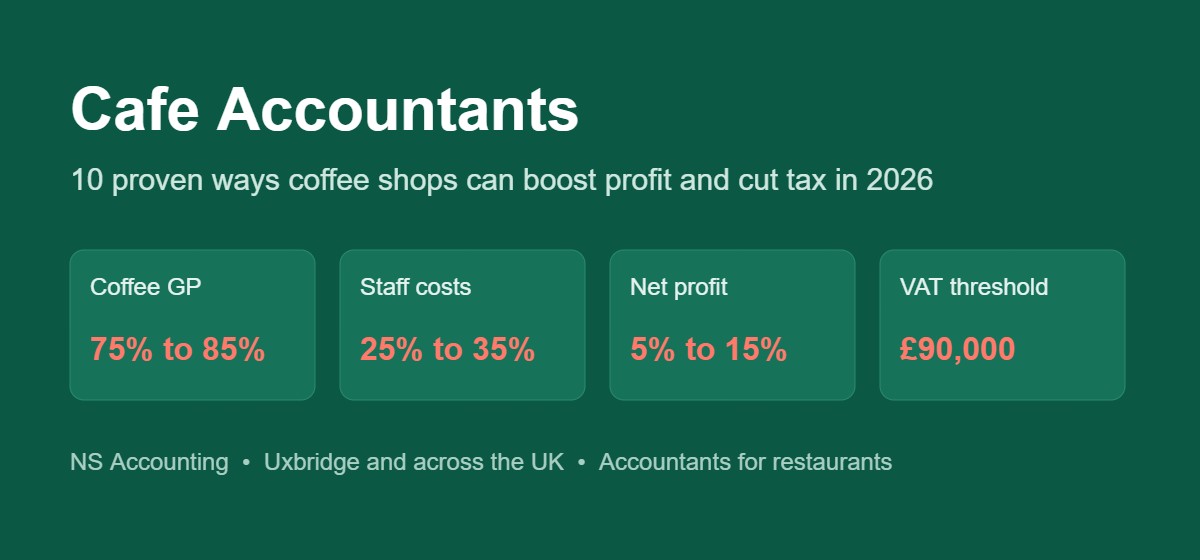
This guide explains what cafe accountants do, the key numbers every coffee shop owner should know, and 10 proven ways cafe accountants help boost profit and cut tax in 2026. If you want to speak to a specialist straight away, contact NS Accounting for a free, no obligation consultation.
What Do Cafe Accountants Do?
Cafe accountants look after the financial side of your coffee shop so you can focus on great coffee and great service. A general accountant may simply prepare your year end accounts. Specialist cafe accountants understand the way cafes trade, from takeaway cups and loyalty cards to card machine fees and delivery apps, and they use that knowledge to improve your profit as well as keep you compliant.
Typical services from cafe accountants include:
- Bookkeeping, bank reconciliations and EPOS integration
- VAT registration and quarterly VAT returns
- Payroll for baristas, kitchen staff and part time workers
- Year end accounts and corporation tax or Self Assessment returns
- Monthly management accounts and cash flow forecasts
- Tax planning, director pay and business structure advice
Why Coffee Shops Need Specialist Cafe Accountants
A cafe is a high volume, low margin business. A typical independent coffee shop might sell 300 to 600 transactions a day at an average spend of £5 to £8. Small differences in cost per cup, waste or VAT coding are multiplied thousands of times over a year. A few pence lost on every coffee can easily add up to £10,000 or more of lost profit.
Cafes also face specific challenges. Takeaway sales can be zero rated or standard rated depending on the item, seasonal trading means cash flow rises and falls, and many cafes start as sole traders before growing into limited companies. Experienced cafe accountants help you navigate each stage with confidence.
Key Numbers Every Cafe Owner Should Know
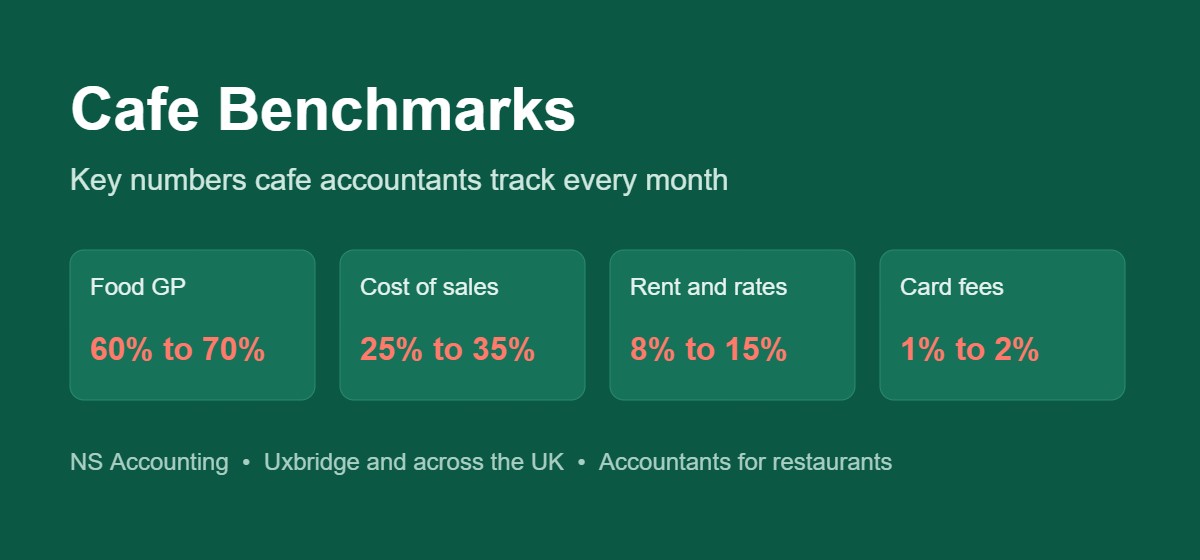
Good cafe accountants will track a small set of key figures every month. The table below shows typical UK benchmarks for independent cafes.
| Measure | Typical UK cafe benchmark |
|---|---|
| Gross profit on coffee and hot drinks | 75% to 85% |
| Gross profit on food | 60% to 70% |
| Overall cost of sales | 25% to 35% of sales |
| Staff costs | 25% to 35% of sales |
| Rent and business rates | 8% to 15% of sales |
| Net profit | 5% to 15% of sales |
These are guides rather than rules, as location, opening hours and menu all make a difference. The key is to measure your own figures accurately and act quickly when they move in the wrong direction.
10 Proven Ways Cafe Accountants Boost Profit and Cut Tax
These are the strategies our cafe accountants use most often with coffee shop clients.
1. Calculate the True Cost of Every Cup
Coffee beans, milk, plant based alternatives, syrups, cups, lids, sleeves and stirrers all add to the cost of each drink. Many owners know the price of beans but not the full cost per cup. We build a simple costing for each drink, so you can price with confidence and see the effect of supplier price rises immediately.
2. Code Takeaway VAT Correctly
Hot drinks are standard rated at 20% whether eaten in or taken away, but many cold takeaway items, such as sandwiches, salads and plain cakes, can be zero rated. Cafes that charge 20% on everything often overpay VAT significantly. Cafe accountants review your till so each item has the right VAT code. Our VAT services include a full review of your menu and past returns.
3. Track Waste and Stock Every Week
Unsold pastries, sandwiches and milk are a major hidden cost for cafes. Recording waste daily and reviewing it each week helps you adjust ordering and production. Cafe accountants can show the cost of waste in your monthly figures, so you can see the savings as they happen.
4. Control Staff Costs With Smarter Rotas
Cafes often have busy morning and lunchtime peaks with quiet afternoons. Matching rotas to footfall, rather than keeping the same staffing all day, can reduce your wage percentage without hurting service. Our payroll management service handles weekly payroll, auto enrolment and minimum wage compliance for your team.
5. Reduce Card Fees and Banking Costs
Most cafe sales are now paid by card or phone, and card processing fees can take 1% to 2% of turnover. On £250,000 of sales, that could be £2,500 to £5,000 a year. Cafe accountants can compare providers and help you negotiate better rates.
6. Choose the Right Business Structure
Many cafes start as sole traders because it is simple. As profits grow, a limited company can be more tax efficient and protects your personal assets. Cafe accountants compare both options using your real figures. If a company makes sense, our company formation service can set it up quickly.
7. Claim Every Allowance on Equipment
Espresso machines, grinders, fridges, ovens, display cabinets, furniture and EPOS systems can all qualify for capital allowances, often giving 100% tax relief in the year of purchase. Read our guide to capital allowances for restaurants and cafes for full details.
8. Pay Yourself Tax Efficiently
If your cafe is a limited company, a combination of a small salary, dividends and pension contributions is usually the most tax efficient way to take money out. Dividend tax rates rose by two percentage points from April 2026, so it is worth reviewing your plan each year with your cafe accountants. Our specialist tax advice team can help.
9. Plan for Seasonal Cash Flow
Many cafes are busier in summer or near offices during the working week, and quieter in January or during school holidays. A cash flow forecast helps you set aside money for VAT, rent and tax bills during busy months, so quiet months do not become a crisis.
10. Review Your Figures Every Month
Monthly management accounts show your sales, gross profit, wage percentage and net profit while there is still time to act. Waiting for year end accounts means problems are found months too late. Our guide to restaurant management accounts explains how monthly reporting works for cafes and restaurants.
Making Tax Digital for Sole Trader Cafes
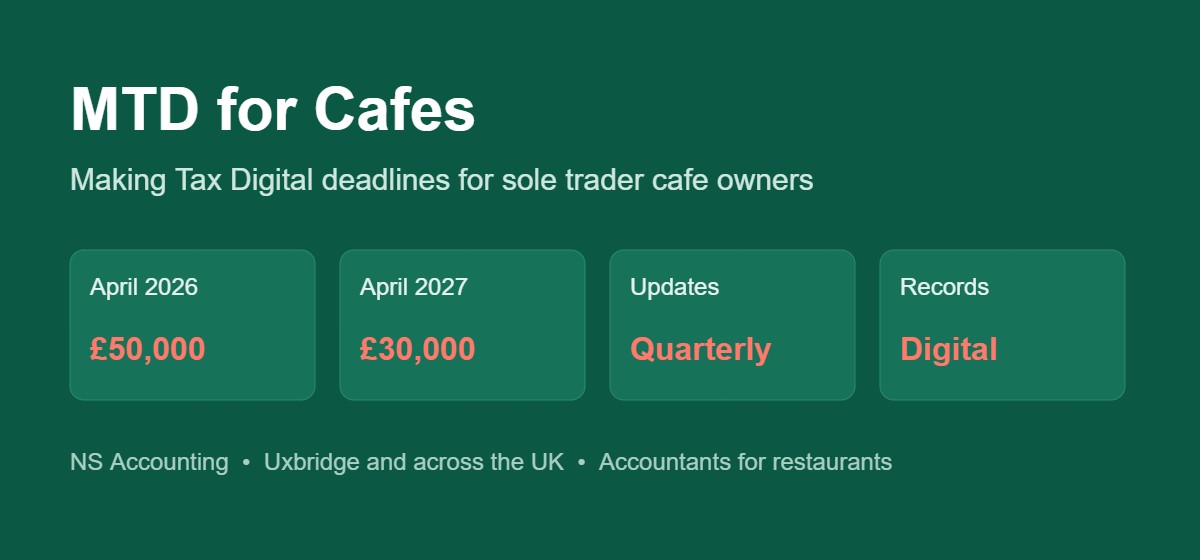
From April 2026, sole traders with qualifying income above £50,000 must keep digital records and send quarterly updates to HMRC under Making Tax Digital for Income Tax. The threshold falls to £30,000 from April 2027. Many cafe owners trading as sole traders will be affected, because qualifying income is based on turnover rather than profit.
This means cafe owners need compatible software and a reliable process for recording sales and expenses every quarter. Our MTD Income Tax accountants can set up your software, link your bank and EPOS, and file your quarterly updates for you.
Business Rates and Rent for Cafes
Rent and business rates are among the largest fixed costs for any cafe. From April 2026, many retail, hospitality and leisure properties benefit from permanently lower business rates multipliers, and smaller properties may also qualify for Small Business Rate Relief. It is worth checking that your rateable value is correct and that you are receiving every relief available. Before signing a new lease, cafe accountants can test whether the rent is affordable based on realistic sales forecasts.
Bookkeeping for Cafes Made Simple
A cafe can generate thousands of transactions each month. Linking your EPOS system, card machine and bank account to cloud accounting software such as Xero or QuickBooks removes most manual work. Supplier invoices can be captured with apps such as Dext, and delivery platform statements can be imported automatically.
Our bookkeeping services keep your records up to date every month, so your VAT returns, payroll and management accounts are always accurate. You can also read our guide to restaurant bookkeeping for more practical tips.
Pricing Your Menu for Profit
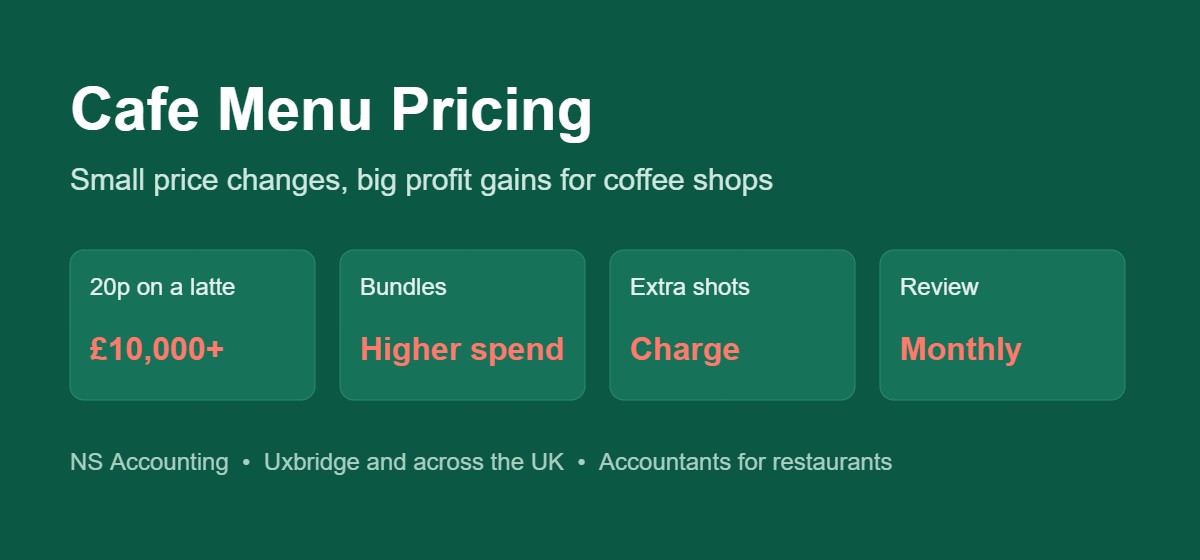
Pricing is one of the most powerful levers a cafe owner has, yet many set prices by looking at the coffee shop down the road. Your prices should reflect your own costs, your location and the experience you offer. A price review should look at the cost of each item, the gross profit it earns, how often it sells and how customers see its value.
Small changes often have a large effect. Adding 20p to a latte that sells 150 times a day adds more than £10,000 to annual sales, almost all of it profit. Bundling a coffee with a pastry, offering a larger size at a slightly higher margin or charging separately for extra shots and alternative milks can lift your average spend without putting customers off. The key is to test changes carefully and watch the results in your monthly figures.
Delivery Apps and Online Orders
Many cafes now sell through Deliveroo, Uber Eats and Just Eat, especially for breakfast and lunch orders. Delivery can bring new customers, but commission rates of 25% to 35% can wipe out the profit on low value orders. You should know exactly how much each platform earns you after commission, packaging and any discounts you fund. Our guide to delivery platform accounting explains how to record platform payouts and VAT correctly.
Loyalty Cards, Gift Cards and Discounts
Loyalty schemes such as a free tenth coffee are popular, but they have a cost that should be built into your pricing. Gift cards and vouchers also need careful treatment, because the VAT may be due when the voucher is sold or when it is used, depending on what it can be spent on. Staff discounts and free drinks for staff should be recorded so your gross profit figures are not distorted.
Cash Handling and Security
Although card payments dominate, many cafes still take some cash. Clear cash procedures protect your profit and your reputation with HMRC. Cash up at the end of every shift, record any differences, bank takings regularly and keep the paperwork. HMRC often compares card and cash sales when reviewing hospitality businesses, so complete and consistent records are essential.
Growing From One Cafe to Several
Opening a second site is an exciting step, but it changes the way you need to manage your finances. You will need reporting by site, tighter cash flow planning, stronger management and possibly a group company structure. Before you sign a second lease, test the numbers carefully. Your first cafe should be consistently profitable, with systems that work without you being there every day. Specialist advice at this stage can save you from expensive mistakes.
A Cafe Accountants Example
Consider an independent coffee shop in Uxbridge with annual sales of £280,000, run as a sole trader. The owner was working six days a week, but profit had fallen to just £18,000 and VAT was charged at 20% on every item.
After a review by our cafe accountants, the owner corrected VAT coding on cold takeaway food, saving around £6,500 a year. A costing review showed that oat milk and large cups were being underpriced, and a small price change added £4,000 of gross profit. A revised rota cut around £5,000 from wages without reducing service at peak times. Together, these changes increased annual profit by more than £15,000. Figures are illustrative, but improvements like these are common when cafe owners work with specialist cafe accountants.
Year End Accounts and Tax Returns for Cafes
Every cafe must prepare annual accounts. If you trade as a sole trader, your profit is reported on your Self Assessment tax return, which must be filed by 31 January after the end of the tax year, with any tax due paid on the same date. You may also need to make payments on account towards next year’s bill, which can come as a surprise in your second year of trading.
If your cafe is a limited company, you must file annual accounts with Companies House within nine months of your year end, pay corporation tax within nine months and one day, and file a company tax return within 12 months. Corporation tax is charged at 19% on profits up to £50,000, rising to 25% on profits above £250,000, with marginal relief in between.
Planning ahead makes a big difference. Reviewing your figures two or three months before your year end gives time to buy equipment, make pension contributions or adjust director pay to reduce the tax due. It also means you know what tax to set aside, so the bill does not cause a cash flow problem. Missing deadlines leads to automatic penalties, so it is worth having a clear calendar of every filing date for your business.
Opening a New Cafe or Coffee Shop
If you are planning to open a new cafe, getting the financial setup right from the start saves money and stress. Before you open, cafe accountants can help you build a business plan and cash flow forecast, decide between sole trader and limited company, register for VAT at the right time, set up payroll and choose accounting software. Our restaurant and cafe startup accounting guide walks you through every step.
How to Choose the Best Cafe Accountants
When comparing cafe accountants, look for:
- Proven experience with cafes, coffee shops and hospitality businesses
- Clear knowledge of takeaway VAT and cafe payroll
- Cloud accounting expertise and EPOS integration
- Proactive advice on pricing, costs and tax planning
- Fixed monthly fees with no hidden extras
- Fast, friendly responses when you need help
Our guide to restaurant and cafe accountant fees explains typical UK prices so you know what to expect.
Why Choose NS Accounting as Your Cafe Accountants?
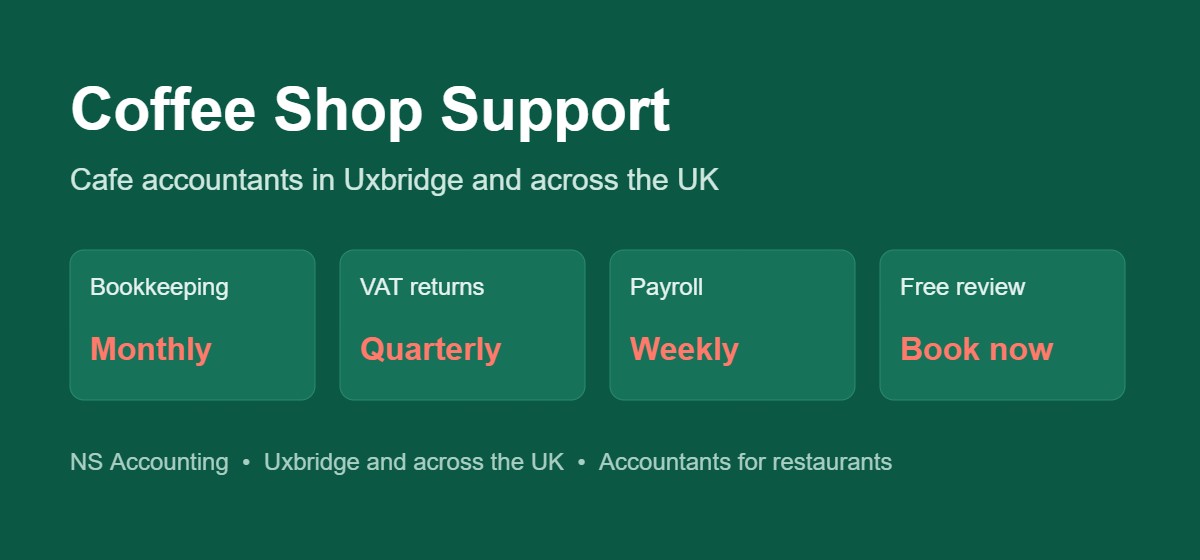
NS Accounting is a firm of accountants based in Uxbridge, supporting cafes, coffee shops and restaurants across Hillingdon, Ruislip, Hayes, West Drayton, Southall, Ealing, Slough and the rest of the UK. As your cafe accountants, we provide:
- Monthly bookkeeping and management accounts
- VAT returns with correct takeaway VAT treatment
- Weekly or monthly payroll and pensions
- Statutory accounts and company tax returns
- Self Assessment for sole traders and directors
- Growth support through our CFO services for multi site cafe groups
Learn more about our accountants for restaurants and cafes service, read our client testimonials or meet the team. For official guidance on food and drink VAT, see the GOV.UK catering and takeaway food VAT notice.
Speak to Specialist Cafe Accountants Today
Every week without clear numbers is a week of lost profit. Whether you run a single coffee shop in Uxbridge or a growing group of cafes across the UK, NS Accounting can review your figures and show you exactly where you could save.
Book your free, no obligation consultation with our cafe accountants today. Call us, message us on WhatsApp or get a free quote online, and let our cafe accountants help your coffee shop pay less tax and keep more profit.
